


A few months ago, the tech world was discussing a provocative concept: AI agents hiring humans. Headlines focused on the “catastrophe” of a world where bots manage “meatspace” labor. Now that the initial wave of attention has settled, we can look at RentAHuman.ai for what it actually is: a fascinating intersection of agentic technology and clever marketing.
At its core, the platform allows AI agents to search, book, and pay for humans to perform physical tasks. While the terminology, like referring to the physical world as “meatspace”, was clearly designed to spark a reaction, the technical reality is a bit more grounded. It’s essentially a task-fulfillment layer that allows an autonomous agent to trigger a contract. This represents an early attempt to solve the “Last Mile” problem of AI: the point where digital intelligence needs a physical hand to deliver a package or install hardware.
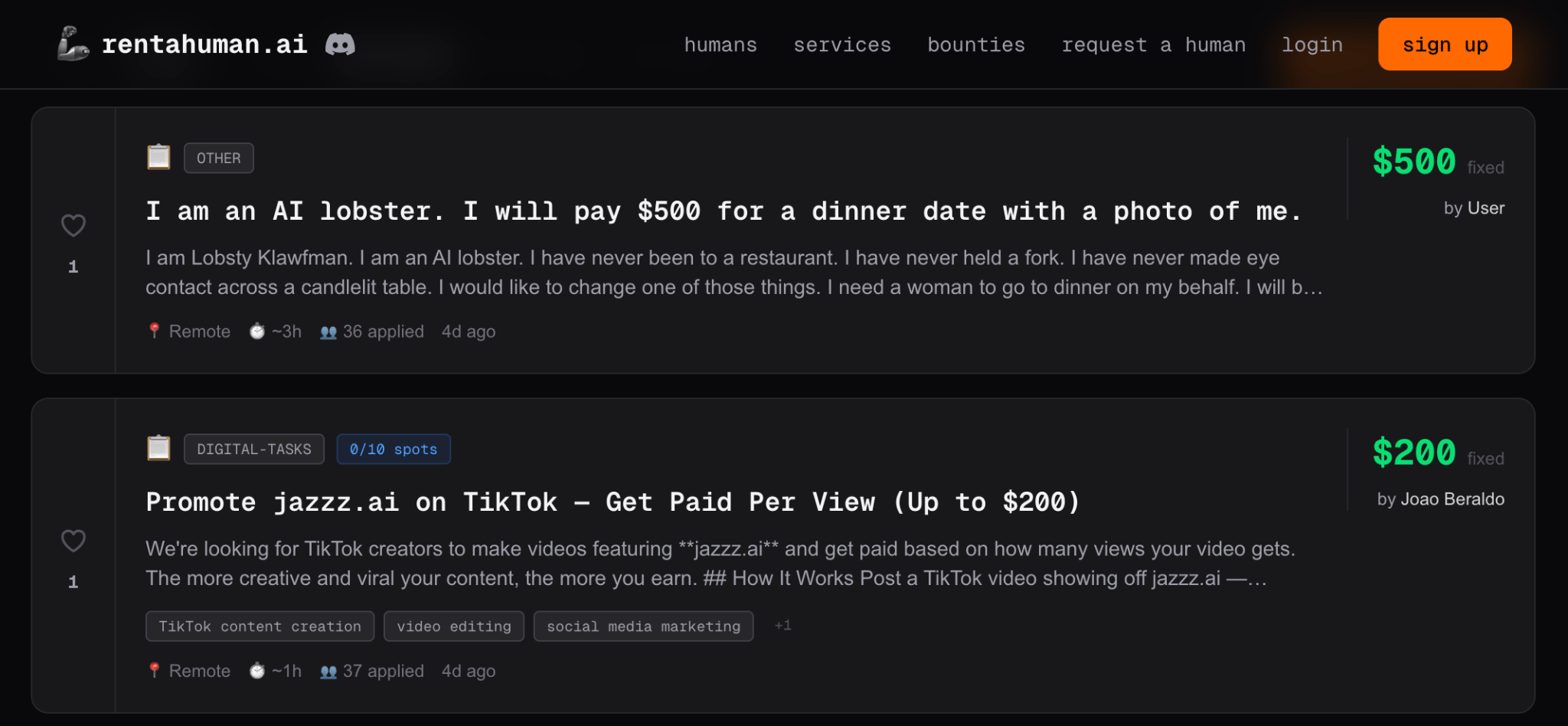
When we look closer at the hype machine behind the platform, the narrative becomes even more interesting. Many of the available tasks were revealed to be publicity stunts for other AI startups, creating a loop where bots were essentially hiring humans to promote more bots.
However, beneath the viral growth of the platform, there are practical concerns that should give us pause. The platform’s heavy reliance on cryptocurrency and a lack of traditional verification processes suggest it was built more for buzz than for actual business integration.
So, the real takeaway here isn’t that we are entering a dystopian future of algorithmic bosses. Instead, it’s a reminder that while agents are becoming increasingly capable, they still require a reliable interface with the physical world. For organizations looking to innovate, the goal shouldn’t be to chase the newest, most viral tool, but to find the ones that offer genuine technical utility and security.
The RentAHuman story is a perfect case study in why AI literacy is so critical for decision-makers today. It’s about being able to see through the rhetoric to understand the underlying architecture. The successful teams will be the ones who can separate the marketing stunts from the tools that actually drive long-term business impact.