


The digital transformation reaches a new milestone in 2026, redefining how people interact with information, brands, and their work environments. At Digital Loop, we observe daily how the transition from two-dimensional screens to spatial, immersive interfaces–so-called Spatial Computing–is restructuring entire industries. The physical and digital worlds are increasingly merging. What for many consumers started as a “gimmick” for entertainment and gaming now directly impacts the operational workflows of companies—not least thanks to highly advanced AI. This development not only opens up a revolutionary advertising channel but also necessitates a complete realignment of modern data architectures and customer journeys.
This guide illuminates the technological pillars of Augmented Reality (AR), Virtual Reality (VR), and Extended Reality (XR). It describes how these immersive media are changing consumer psychology and measurable marketing KPIs, the driving role Artificial Intelligence (AI) plays in this ecosystem, and how these technologies are revolutionizing the modern workplace.
Technological Foundations: AR, VR, MR, and XR Demystified
To precisely evaluate the strategic implications for modern marketing and workplace design, a clear definition of the various technological manifestations is essential. Terms are often used synonymously, even though they entail fundamentally different user experiences, hardware requirements, and data-analytical potentials. The term Extended Reality (XR) serves in this context as an all-encompassing umbrella term for the entire spectrum of immersive technologies, from simple data overlays to complete digital isolation.
Virtual Reality (VR): Complete Digital Isolation
Virtual Reality completely replaces the user’s physical environment with a computer-generated, three-dimensional simulation. Through the use of closed headsets (such as the Meta Quest series or the Apple Vision Pro), visual and acoustic contact with the real world is physically and software-side interrupted. VR technology is characterized by maximum immersion. In 2026, the VR market has developed from a niche technology for gamers into a global economic factor with a volume of approximately 87 billion US dollars, supported by about 171 million active users worldwide.(Source: Goldmansachs)
The strength of VR in marketing lies in the absolute control over the consumer’s attention. Combined with the incredible reach that modern gaming platforms now achieve, this results in completely new, high-caliber touchpoints and ad placements for brands. In a VR environment, there are no physical distractions, no push notifications on smartphones, and no annoying ambient noise. Brands can create architecturally impossible, fantastic worlds where consumers interact with products in a highly focused manner. In the B2B sector and enterprise environments, VR is increasingly used for complex training, virtual prototyping in industry, and immersive collaboration, with the enterprise VR market valued at 24 billion US dollars in 2026.
Augmented Reality (AR): The Digital Extension of Reality
Augmented Reality overlays the user’s real, physical environment with digital information, holograms, or contextual data in real-time. Unlike VR, the user remains firmly anchored in their physical reality; the digital layer serves merely as a contextual extension. AR is by far the most widely used immersive technology, primarily due to its enormous accessibility. In 2026, there are over 2.1 billion active mobile AR-enabled devices worldwide, with the Asia-Pacific region representing the largest single market with 847 million devices.
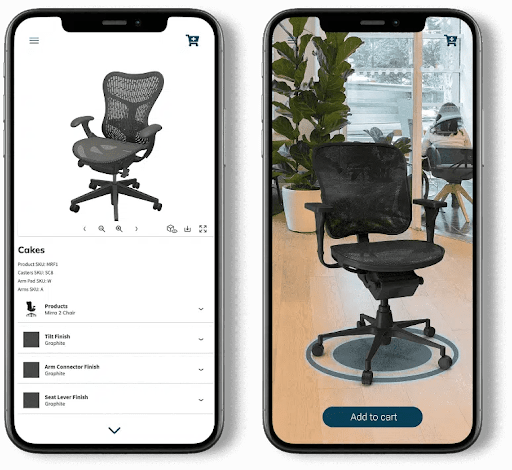
While smartphone-based AR dominates the mass market (for example, through social media filters, the Google App, or e-commerce product visualizations), the focus is increasingly shifting to wearables. Lightweight AR glasses, so-called smart glasses, project virtual screens directly into the wearer’s field of view without isolating them from their surroundings. AR holds the largest market share in marketing because it directly influences the immediate physical purchasing decision at the point of sale or in the living room (for example, when placing virtual furniture).
Mixed Reality (MR): The Interactive Fusion
Mixed Reality represents the technological and semantic bridge between AR and VR. While simple AR applications often only lay digital objects statically or on predefined markers over the camera image, an MR system understands the three-dimensional geometry of the physical space (spatial mapping) in real-time. In an MR environment, digital objects can interact logically and physically correctly with physical objects. A virtual ball can realistically bounce off a real table or optically disappear behind a physical sofa, a phenomenon known as “occlusion.” MR requires highly sophisticated, compute-intensive sensor technology, including LiDAR, RGB cameras, and infrared depth sensors, and represents the most advanced form of spatial computing.
Market Dimension | Augmented Reality (AR) | Virtual Reality (VR) | Combined XR Market
|
|---|---|---|---|
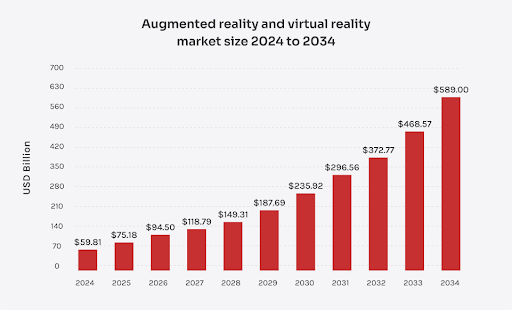
Market Size (2026) | approx. 112.4 to 118.79 Billion USD | approx. 31.2 to 87.0 Billion USD | High-growth total ecosystem |
Forecast (2032/2033) | 828.47 Billion USD (2033) | 123.06 to 345.0 Billion USD (2032) | > 589 Billion USD (2034) |
CAGR (Long-term) | 34,3 % | 20,3 % bis 26,0 % | 31.67 % (2026-2031) |
Global User Base | > 2.1 Billion (mobile devices) | 171 Million (active headset users) | Increasing penetration in the enterprise sector |
The market data illustrates a significant acceleration. After 2025 was marked by hardware delays and a market correction, a massive rebound in hardware shipments of an estimated 87 percent is emerging for 2026. This is driven primarily by improved, lighter, and more cost-effective smart glasses, as well as the increasing acceptance of spatial computing in everyday corporate life.
The Transformative Influence on Customer Behavior and Marketing
The integration of XR into the marketing mix is far more than a visual gimmick; it changes the fundamental mechanisms of consumer psychology. Traditional digital marketing channels in 2026 are increasingly struggling with “ad fatigue,” declining click-through rates, and an extremely fleeting attention span—influenced by the oversupply in social media and the flood of cheaply generated AI content. Immersive technologies offer the decisive leverage here by turning the consumer from a passive observer into an active designer of a brand experience. The effects on customer behavior can be precisely verified using quantifiable metrics and depth-psychological phenomena.
The Psychological Phenomenon of “Awe”
The fact that successful XR marketing campaigns can achieve a return on ad spend (ROAS) up to 400% higher can be explained by the targeted triggering of complex cognitive states.
(Source: https://veri-media.io/wp-content/uploads/2023/02/ar-vr-roi.pdf)
Scientific studies on consumer behavior in the Metaverse and XR environments identify the psychological phenomenon of “Awe” as the critical mediator for perceived brand value and purchase intent. This experience consists of several measurable dimensions: the perception of vastness, the need for cognitive accommodation, the feeling of self-diminishment in a large environment, altered time perception, and an intense sense of physical and social connection.
When consumers immerse themselves in a well-designed VR brand world or see an AR hologram in breathtaking detail, these psychological mechanisms take effect. The altered time perception leads to a drastic increase in dwell time. A large-scale analysis of over 3,200 AR marketing campaigns in North America and Europe from 2026 shows that the average dwell time for AR interactions has risen to 94 seconds—a 25 percent increase compared to previous years. Compared to the few milliseconds dedicated to a classic social media post, this represents an unprecedented intensity of brand engagement.
Qualitative research also confirms that these escapist experiences and vivid mental images increase brand recall by 27 percent.
(Source: The impact of Augmented Reality and Virtual Reality on Consumer behavior and Engagement – published 2025 in the International Journal of Research Marketing)
Increase in Conversion Rates and Reduction of Returns
Beyond psychological brand building, AR delivers measurable, hard business metrics that directly impact Return on Investment (ROI). In e-commerce, the ability to visualize products realistically in one’s own physical space before purchasing dramatically reduces cognitive dissonance and consumer purchase uncertainty.
The data from 2026 supports this impressively: A study by Shopify Commerce Trends, which analyzed behavior across 42,000 global merchants, found that stores using sophisticated AR product visualizations recorded an average increase in conversion rates of 101 percent. This significantly exceeds previous benchmarks of 94 percent and shows that consumers are no longer just trying out AR but are actively integrating it into their purchasing process. A classic example is the furniture retailer IKEA, where users spend twice as long in AR sessions as in the traditional webshop, leading to a 30 percent increase in click-through rates on product pages.
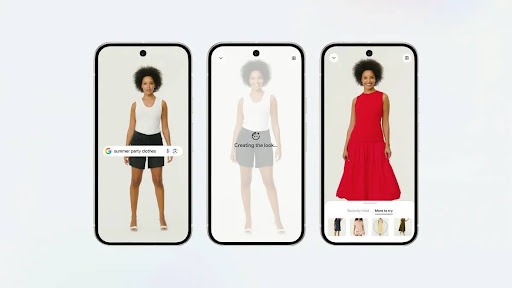
Even more crucial for the profitability of many retail companies is the reduction in return rates. Returns cause immense logistics costs, tie up capital, and burden the carbon footprint. A Deloitte Digital Retail Transformation Report from 2026 shows that 68 percent of the top 500 global retailers now use dedicated AR shopping features, leading to an average reduction in return rates of 31 percent. For size-sensitive items like clothing or shoes, where virtual try-on technologies are used, returns even drop by up to 40 percent.
The Evolution of Social Commerce
Especially starting with Generation Z, the boundaries between social media, entertainment, and e-commerce are increasingly blurring. Immersive formats catalyze this trend. According to the Meta Commerce and Accenture Joint Social Shopping Index, 91 percent of active AR users interact with social shopping features. This target group conducts an average of 6.4 social shopping sessions per week and exhibits a conversion rate 2.3 times higher than classic digital channels. Advertising budgets are following this development: global spending on AR advertising exceeded the 5.14 billion US dollar mark by mid-2026, of which 2.87 billion alone was for AR formats in social media. For companies, this means that AR assets must be seamlessly shareable and experienceable across platforms (“WebAR”) without users having to install additional native apps.
The Convergence of Spatial Computing and Artificial Intelligence
Hardware–glasses, sensors, and displays–merely represents the canvas of spatial computing. The true driver that makes this technology intelligent, responsive, and scalable in 2026 is Artificial Intelligence (AI).
Semantic Spatial Understanding through Computer Vision
Traditional AR applications often suffered from a lack of understanding of the physical world; holograms floated unnaturally in space or ignored physical obstacles. Modern AI algorithms, especially Convolutional Neural Networks (CNNs), solve this problem through advanced computer vision and sensor fusion.
The AI processes data from RGB cameras and LiDAR sensors in real-time to create a three-dimensional map of the environment (Simultaneous Localization and Mapping, SLAM). Far more important than pure geometry, however, is semantic understanding: AI models like Google’s Project Astra or Meta’s Spatial AI not only recognize that a surface exists in front of the user but classify it as a “wooden table” or recognize a complex machine part.
If the AR glasses semantically understand the environment, digital overlays can act context-sensitively—for example, the system warns a technician of a component recognized as hot or displays specific nutritional information in retail as soon as the user focuses on a food product.
Generative AI: The Democratization of 3D Content Creation
The scaling of XR marketing campaigns often failed in the past due to the exorbitant costs of manually creating 3D assets. A single, high-quality 3D model of a product often required days of work from specialized 3D artists. Generative AI has already revolutionized and radically shortened this process.
Through techniques like Neural Radiance Fields (NeRFs) and Score Distillation Sampling (SDS), production-ready, textured 3D models can be generated within minutes from simple text prompts or a few 2D photographs.
Tool | Technological Focus | Relevance for XR and Spatial Computing
|
|---|---|---|
Meshy | Text-to-3D, Image-to-3D | Generates clean topologies and PBR textures in under a minute, optimal for scalable e-commerce catalogs. |
Luma AI (Genie) | NeRF technology, photorealism | Enables extremely fast creation of environment scans and 3D objects via smartphone app and web. |
Google DreamFusion | Score Distillation Sampling (SDS) | Sets qualitative benchmarks for highly detailed, dynamically lightable (relightable) 3D objects. |
Meta 3D Gen | PBR (Physically Based Rendering) | Combines mesh generation (AssetGen) and texture synthesis (TextureGen) for photorealistic models directly importable into AR/VR engines. |
Matrix Framework | Multilingual Speech-to-3D | Drastically reduces latency to under 50 seconds for voice-controlled generation of 3D objects directly in the AR environment. |
This democratization of content creation means for MarTech pipelines that companies can largely automatically convert their existing 2D product catalogs into 3D catalogs for spatial commerce. It also enables the procedural, infinite generation of virtual worlds and textures, which minimizes storage requirements and drastically reduces loading times in mobile AR applications.
Intelligent Avatars and Conversational Interfaces
The interface of the future in XR environments is not the cursor or the touchscreen, but natural language combined with gaze tracking and gesture control. AI systems based on multimodal Large Language Models (LLMs) process speech in the direct context of the visual environment.
Companies are increasingly implementing AI-driven avatars as brand ambassadors, virtual sales consultants, or training instructors. These “Digital Humans” can not only interact around the clock in countless languages but also dynamically adapt their facial expressions, gestures, and argumentation structure to the user’s behavior. If a user with AR glasses asks, “What is the difference from that model over there?”, the AI uses gaze tracking to understand exactly which physical object the user is looking at, analyzes the image material, and delivers the correct answer in real-time directly through the glasses’ audio system. Such hyper-personalized, multimodal experiences generate a deep level of engagement and lift customer service to an unprecedented level.
Large providers like OpenAI, AWS, and Google all already possess powerful LLMs that allow for conversational AI or fluid dialogues. The lean Gemma models from Google are also excellently suited for local use on-the-edge, e.g., on mobile devices and AI glasses.
At Digital Loop, we have already implemented use cases with clients to build conversational interfaces that allow for the query of qualitative information and data from, for example, sales staff during a dialogue.
Field Report: The Viture Luma Ultra AR Glasses in the Digital Workplace
While the marketing potential is enormous, the immediate benefit of AR glasses in 2026 is increasingly evident in the B2B environment and in the design of the modern workplace. The Viture Luma Ultra AR glasses, launched at a price of 599 US dollars, explicitly position themselves at the intersection of high-end entertainment and serious productivity for power users, programmers, and business travelers. The price also shows that it is becoming “more affordable” and is already suitable for a mass market.
Hardware Specifications: Compact, Sharp, and Adaptable
The Viture Luma Ultra differs fundamentally from closed, bulky VR headsets. Weighing merely 83 grams and with a form factor resembling a slightly more massive pair of sunglasses, it aims for hours of wearing comfort.
Unlike its predecessor model, the Luma Pro, the Ultra variant is equipped with an advanced sensor array: a front-facing RGB camera and dual grayscale depth sensors capture the environment to recognize spatial depth and hand gestures.
SpaceWalker Software and Multi-Monitor Productivity
When connecting the glasses to a computer via USB-C, they initially function as a simple external monitor (screen mirroring). The image moves rigidly with every head movement, which is ergonomically unsuitable for longer work sessions.
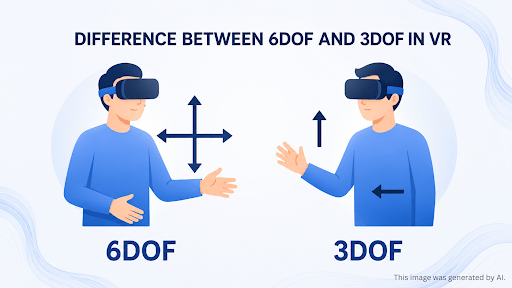
The true workplace revolution only unfolds through the companion software SpaceWalker, which is available for macOS, Windows, iOS, and Android. SpaceWalker uses the cameras of the Luma Ultra to simulate hardware-supported 6-Degrees-of-Freedom tracking (6DoF). This means that the projected virtual monitors remain firmly anchored in real space (Anchor Mode). The user can turn their head to look at different monitors, move closer to the monitors, or lean back—the digital image remains stable in the physical space.
Application in Everyday Work: Coding, Writing, and Analysis
In practice, for tasks such as software development (coding), writing long analyses, or spreadsheet editing, the combination of Luma Ultra and SpaceWalker shows enormous strengths but also reveals conceptual weaknesses.
The Strengths:
- Location-Independent Multi-Monitor Setup: Developers and marketers can set up a configuration with up to three giant virtual screens or a massive 21:9 ultrawide screen in any location, no matter how cramped (e.g., on a plane or in a café).
- Focus and Privacy: In open-plan offices or while traveling, the glasses offer absolute discretion. Dimming the electrochromic lenses also creates an isolated “tunnel of focus” that minimizes distractions.
- Excellent Audio Quality: The spatial audio system integrates speakers into the eyeglass temples without heavily disturbing the environment (low audio bleeding). Combined with the integrated microphones, web conferences can be held seamlessly without needing to connect additional equipment.
The Weaknesses and Limitations:
- Software Inconsistencies and Drift: Although 6DoF tracking is constantly improving, one still struggles with “drift” phenomena, especially when lighting conditions in the room change or the software integration glitches. Furthermore, the SpaceWalker software is more robust on macOS than on Windows and, unfortunately, requires additional adapters and cables for desktop PCs to transmit power, video, and data.
- Limited App Experience: While Viture and other providers already offer SDKs, the range of native apps for the glasses is still very limited and mostly uses the “browser version.”
In addition to this setup, VITURE also introduced the Helix glasses at AWE 2026, the first AI safety glasses based on NVIDIA’s XR AI solution. These are intended to learn from work processes through powerful AI features and accompany the user as a type of assistant for safety.
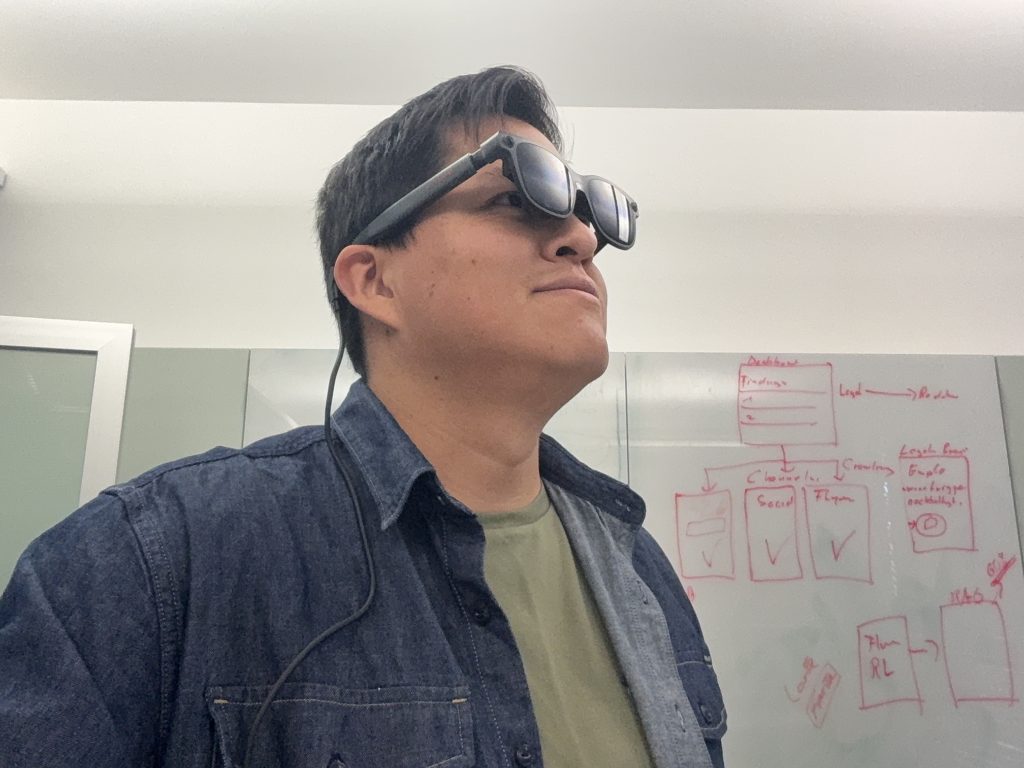
Experience with Workplace Use
The Viture Luma Ultra I tested is a fascinating piece of hardware that realizes the vision of the “virtual office in a backpack.” For individual tasks that require deep concentration (deep work, coding, texting) or as a private entertainment system while traveling, it is superior to conventional laptop screens. The text sharpness, the brightness of the OLEDs, and the diopter adjustment are very good and helpful.
However, anyone expecting a flawless, floating command center like in science fiction movies must be aware of the current software-side limitations (drifting, 52-degree field of view). The glasses do not replace the powerful backend (such as a Mac or a PC) but act as its spatial extension. Nevertheless, anyone willing to get used to the ergonomics and software handling of SpaceWalker receives a productivity tool with the Luma Ultra that far exceeds conventional monitors in flexibility.
The top dog with AI features would be the Apple Vision Pro, but it is not really comfortable to wear in the long run, and at almost 4,000 EUR, it is in a different price category.
Conclusion
The era of spatial computing is dawning. Augmented, Virtual, and Mixed Reality have left the stage of expensive niche products and are demonstrably transforming consumer behavior. By combining immersive visualization with psychological drivers (“Awe”), companies can build deeper emotional bonds, reduce returns, and achieve higher price points in the market.
The rapid development of Generative AI simultaneously eliminates the bottleneck of 3D content creation and enables context-aware, dynamic interactions through edge computing and intelligent avatars.
AI glasses from Meta and Rokid (the first AI glasses with Gemini) are just the beginning. With the AI glasses announced by Google, in collaboration with Gentle Monster and Warby Parker, these will become intelligent assistants in everyday life.
At the same time, smart glasses like the Viture Luma Ultra prove that the shift of screens into space has also reached the digital workplace to increase productivity and focus. Brands that adapt these technologies today and align their MarTech infrastructures for processing spatial data and AI analyses create a fundamental competitive advantage in the post-mobile era of the internet.