
Back

Agentic Commerce in Operations: The New Retail Playbook

Disclaimer: At Web Summit 2026 in Lisbon, Zalando CTO Graeme Smith demonstrated how the company is already implementing agentic commerce operationally. We have summarized the most exciting insights from his keynote and looked at what this specifically means for your marketing technology strategy.

Digital Loop attended Web Summit 2026 in Lisbon to look past the AI hype and see how leading enterprises actually deploy autonomous systems in production. By examining real-world implementations from industry leaders like Zalando, we gathered actionable insights to help our clients optimize their MarTech strategy and thrive in an AI-driven landscape.

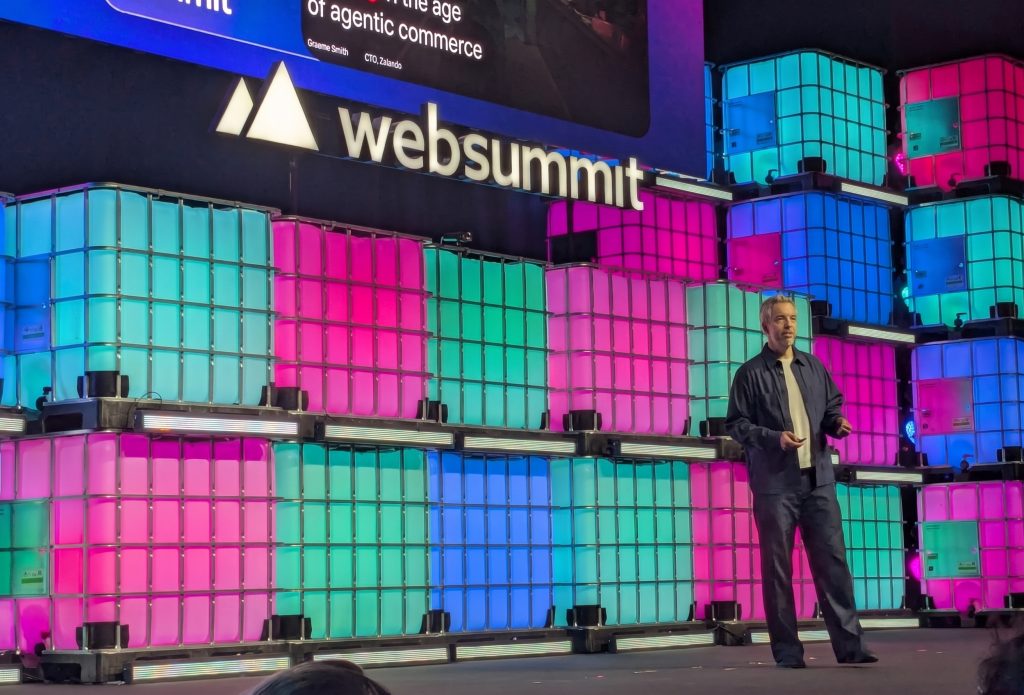
Graeme Smith at Web Summit 2026, photo by Digital Loop

 Graeme Smith, CTO of Zalando, presented their agentic commerce playbook at Web Summit 2026 in Lisbon. Autonomous AI tools currently search, compare, and, in some markets, make purchases for consumers. Mastering the relationship between marketing and technology creates the business impact required to operate in this environment. When data sits in silos and tools fail to communicate, AI investments fail to generate returns. Zalando’s operational approach offers a practical framework for preparing your MarTech infrastructure for AI agents.

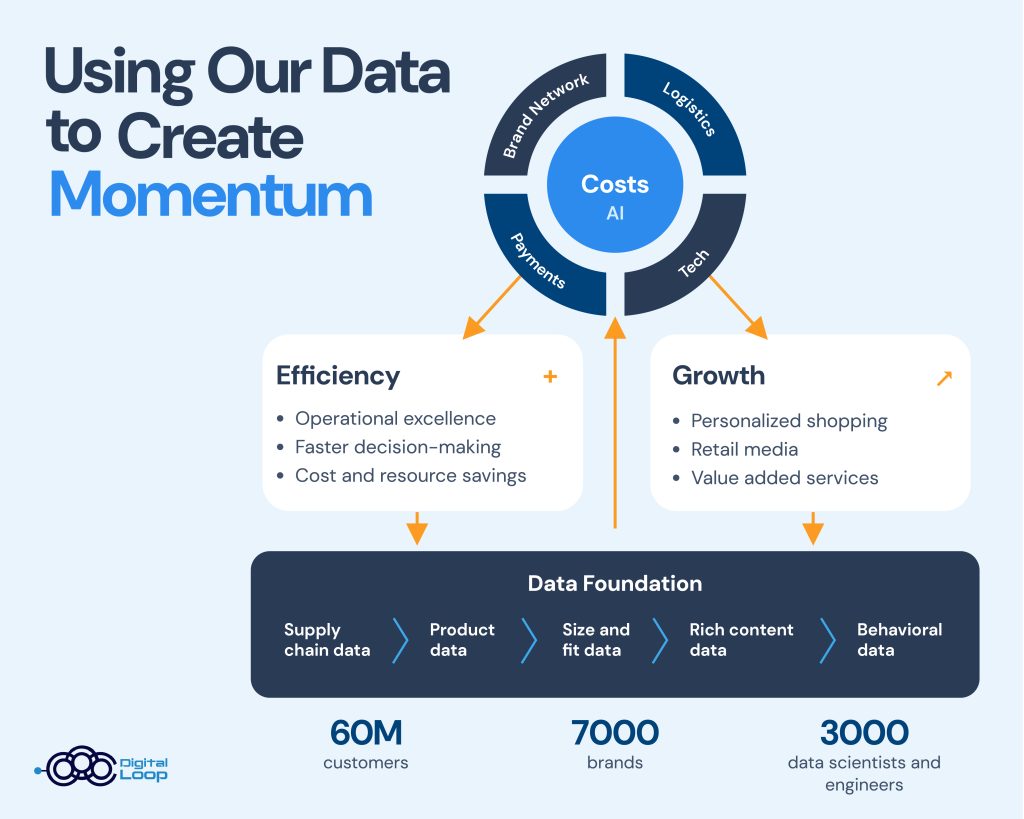
Illustration of momentum strategy and data foundation – Source: Zalando, Web Summit 2026

The Evolution from Mobile to Agentic Commerce 

Consumers can now use AI agents to research products, discover deals, and transact autonomously. Conversational interfaces are replacing the standard search bar. Organic traffic drops when AI Overviews activate, as users engage directly with AI summaries rather than scrolling through links. Businesses must treat AI agents as a distinct shopping channel. You have to decide how to integrate with it, optimize for it, and make it function within your specific digital ecosystem.

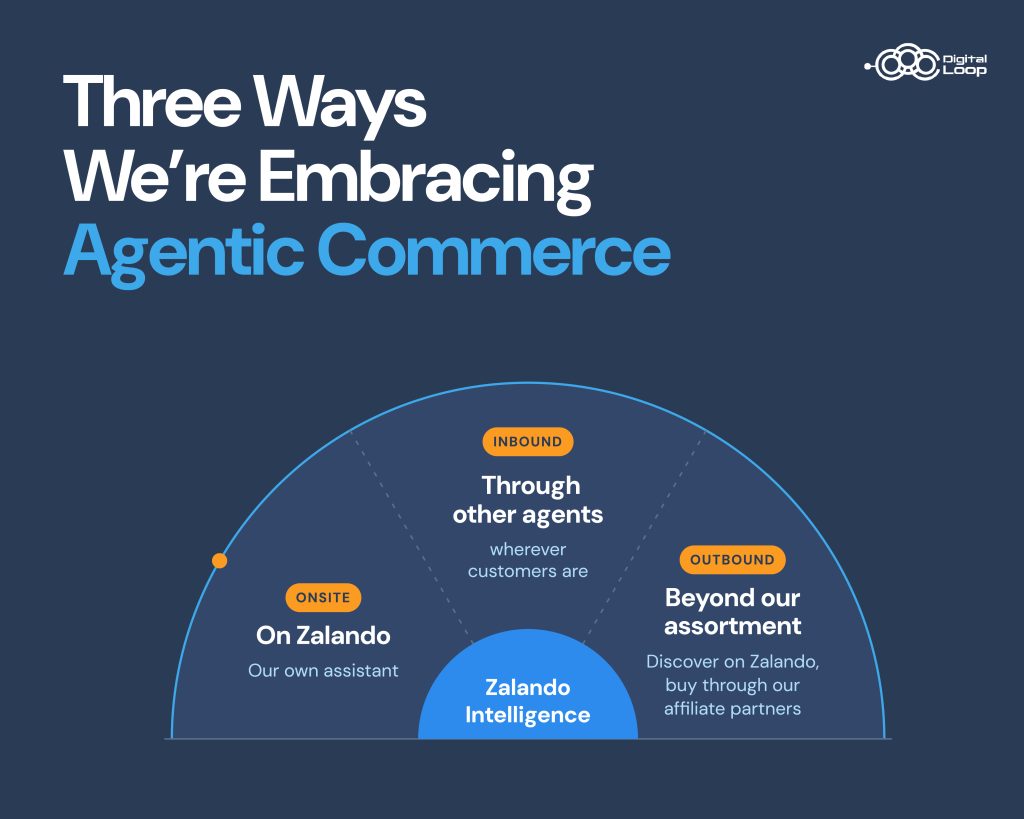
Illustration of the three-part agentic commerce strategy – Source: Zalando, Web Summit 2026

A Three-Part Strategy for Agentic Commerce 

Zalando breaks its agentic commerce operations into three distinct areas:

1. Owned Agentic Commerce (Lifestyle AI) 

Zalando built an internal conversational interface, the Zalando Assistant, powered by its proprietary data:

  • Data is the key: They leverage behavioral data from 63 million active customers and detailed sizing measurements to generate specific recommendations.
  • The trusted pharmacist model: The AI evaluates the user’s specific mission, preferences, and lifestyle needs rather than pushing generic top sellers.
  • Business impact: Customers using this assistant are more than twice as likely to make a purchase.

Behind the scenes, this operates on Agentic RAG principles. The AI retrieves the user’s body measurements, reasons about the fit across 10,000 size charts, and acts by recommending the correct item.

2. Inbound Agentic Commerce (GEO) 

Customers increasingly ask platforms like ChatGPT for product recommendations:

  • Generative Engine Optimization (GEO): Zalando optimizes its catalog to become the primary referred platform by agents in Europe.
  • Experimentation: They run advertising tests within ChatGPT and partner with Google to allow checkouts directly from generative search results.

Your MarTech stack must structure content and product data so AI agents can access, parse, and cite it instantly.

3. Outbound Agentic Commerce 

Zalando turns its owned AI into a gateway for partner retailers:

  • Expanded assortment: They partnered with Westwing to offer home and living products within the secure Zalando app.
  • Ecosystem building: This enriches Zalando’s customer data and provides partner brands with access to their European audience.
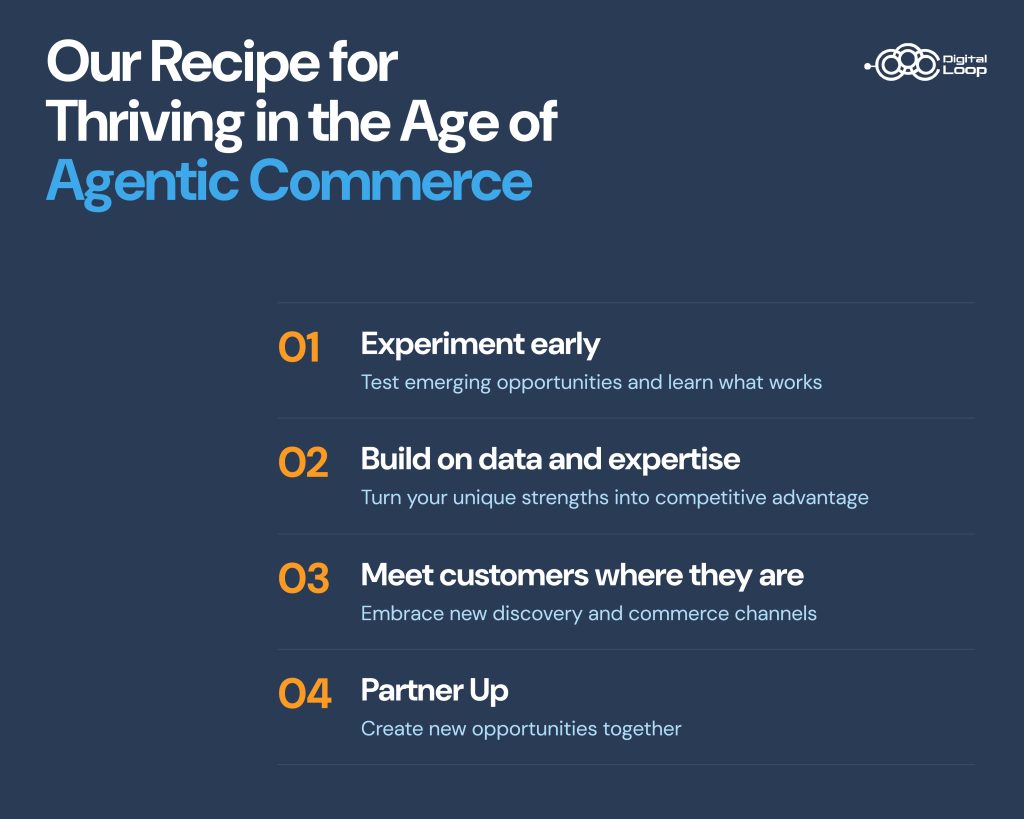
Illustration of the four-step recipe for thriving in agentic commerce – Source: Zalando, Web Summit 2026

Preparing Your MarTech Stack for the AI Era 

Agentic commerce requires accessible, structured data. AI agents fail to create native experiences when they lack clean inputs. Companies stall when their data fragments across disconnected platforms and outdated tracking tools. Siloed customer records create hard barriers to GAIO.

To support agentic commerce, your infrastructure requires:

  • Unified data pipelines: Implement architectures like AWS data lakes to collect and transform customer data from all sources.
  • Data quality management: AI models require clean, normalized data to make accurate recommendations and avoid hallucinations.
  • Digital Analytics: Deploy GDPR-compliant tracking to measure the customer journey across your properties.
  • System integration: Focus on the data flow between your technologies rather than the individual tools.

The Next Step in Your Digital Transformation 

Companies that configure their data pipelines for AI agents gain an immediate distribution advantage. We develop tailored, data-driven products that address your immediate integration needs. Our engineers combine MarTech strategy with custom product development. We implement the systems that ensure your SEO, AI, and tracking architecture communicate effectively to drive growth.

Reach out to Digital Loop to build a data foundation that supports agentic commerce.

Marcello Soldani
Marcello Soldani
Strategic communication with substance: 4+ years of expertise in stakeholder engagement and executive messaging. The bridge between leadership and teams to drive tangible brand success.